
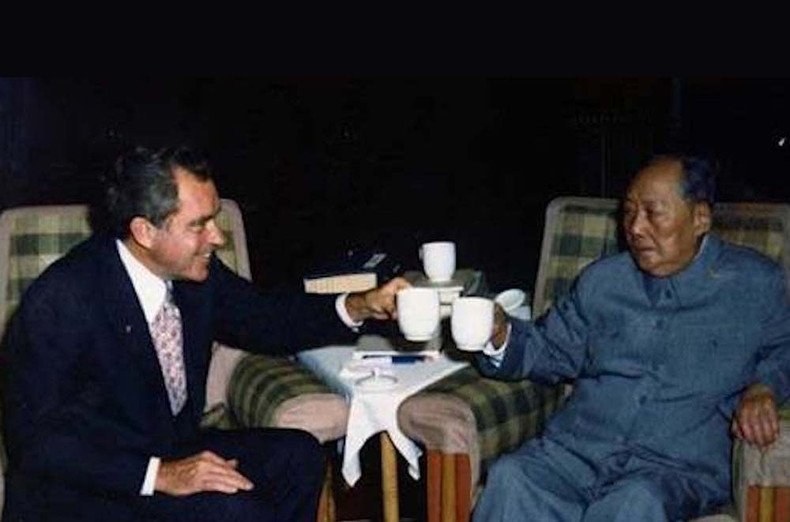
Nixon, China, and the Diplomatic Power of Tea
On February 21, 1972, a cold wind swept across the runway at Beijing Capital Airport as an American presidential aircraft came to a stop.
The eyes of the world were fixed on the aircraft door.
When U.S. President Richard Nixon stepped onto Chinese soil, few could predict how profoundly the following week would reshape global history. The United States and the People's Republic of China had been separated by more than two decades of political isolation, mutual suspicion, and limited communication. To most Americans, China remained a distant and mysterious land. To many Chinese, America seemed equally unfamiliar.
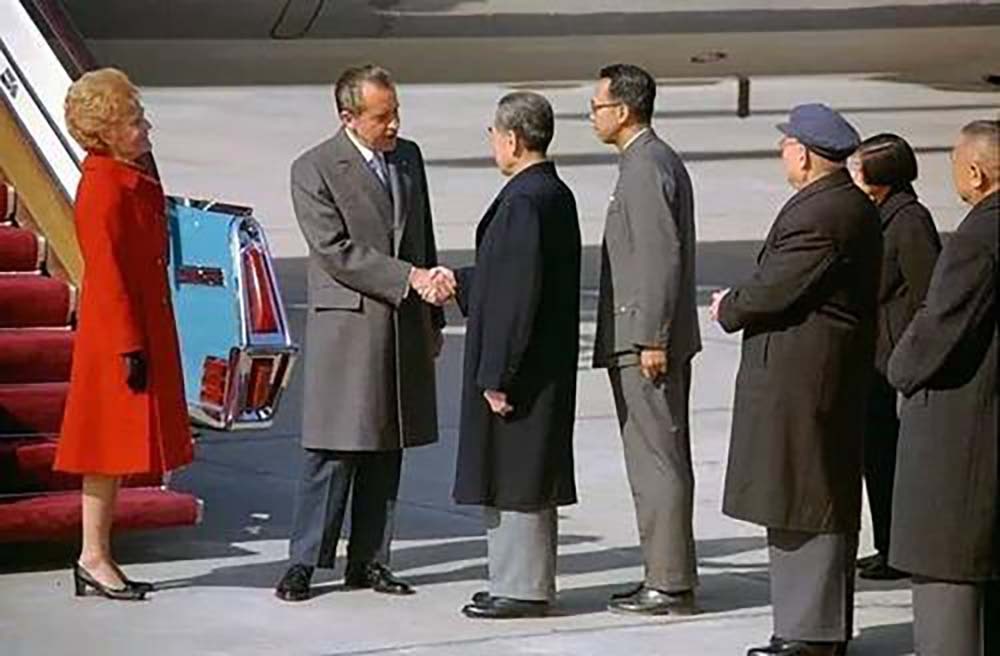 Television cameras captured what would become one of the most iconic images of the twentieth century: Richard Nixon shaking hands with Chinese Premier Zhou Enlai.
That handshake ended more than twenty years of diplomatic estrangement.
It also became one of the defining moments of Cold War history.
Historians would later call Nixon's visit "the week that changed the world." Most discussions focus on diplomacy, strategy, geopolitical realignment, and the long-term impact on international relations. Yet hidden beneath those monumental events was another story, one that rarely appears in history textbooks.
Throughout that remarkable week, one silent participant appeared at nearly every important meeting, banquet, and conversation.
It delivered no speeches.
It signed no agreements.
It occupied no official seat at the negotiating table.
Yet it was always present.
It was tea.
Decades later, many American journalists who accompanied Nixon still recalled how deeply tea seemed woven into daily life in China. Whether in the Great Hall of the People, the Diaoyutai State Guesthouse, or beside the tranquil waters of West Lake in Hangzhou, tea was everywhere.
And in its own quiet way, tea became part of one of the most fascinating cultural stories in modern diplomatic history.
From the Boston Tea Party to Beijing Tea Cups
In a curious twist of history, America's relationship with tea stretches back long before Nixon's visit to China.
On the evening of December 16, 1773, the harbor of Boston became the stage for one of the most famous acts of protest in American history. Disguised as Native Americans, a group of colonists boarded British ships and dumped 342 chests of tea into the icy waters below.
The event became known as the Boston Tea Party.
For Americans, it remains one of the defining symbols of resistance against British rule and a major precursor to the American Revolution.
In a sense, tea helped give birth to the United States.
At that moment in history, tea represented protest, rebellion, and political defiance.
Nearly two hundred years later, however, tea would come to symbolize something entirely different.
In 1773, Americans threw tea into the sea.
In 1972, the Chinese served tea to an American president.
History has a remarkable sense of irony.
The same beverage that once fueled conflict would eventually help foster understanding.
The Mysterious China Americans Had Never Seen
Before Nixon's visit, most Americans knew very little about China beyond headlines and political rhetoric.
For more than two decades, there had been virtually no meaningful exchange between the two countries. To many Americans, China remained a largely unknown society hidden behind a political curtain.
When American television networks began broadcasting Nixon's trip, millions of viewers watched with fascination.
They saw Beijing's broad avenues.
They saw the Forbidden City.
They saw the Great Wall stretching across mountain ridges.
They saw the picturesque beauty of Hangzhou's West Lake.
But they also noticed something else.
The Chinese seemed to drink tea constantly.
There was tea during meetings.
Tea during breaks.
Tea at banquets.
Tea during informal conversations.
Even at the highest levels of government, tea appeared far more frequently than coffee.
For Americans raised in a coffee-centered culture, this was both unfamiliar and intriguing.
Many journalists began to realize that tea in China represented far more than a simple beverage.
Kissinger's Unexpected Love Affair with Dragon Well Tea
In fact, the first senior American official to be charmed by Chinese tea was not Nixon, but Henry Kissinger.
In 1971, Kissinger made his famous secret trip to China, laying the groundwork for Nixon's historic visit.
During meetings at the Diaoyutai State Guesthouse, Premier Zhou Enlai welcomed his American guest according to Chinese tradition, serving him premium Longjing tea, also known as Dragon Well tea.
For Kissinger, who was accustomed to coffee and Western beverages, the experience was entirely new.
The tea was pale and crystal clear.
Its aroma was delicate yet persistent.
Its flavor seemed subtle at first, only revealing its complexity over time.
According to a widely circulated story, Zhou later presented Kissinger with a kilogram of top-grade Longjing tea as a gift.
When Kissinger returned to Washington, however, the tea reportedly attracted considerable attention among colleagues and government officials eager to taste this famous Chinese tea.
Before long, much of the tea had been shared.
When Kissinger returned to China months later, he supposedly joked to Zhou that his precious tea had been "stolen" by friends and colleagues.
Zhou laughed and arranged for more Longjing tea to be sent.
Whether every detail of the story is perfectly accurate or not, it illustrates something important: tea often succeeded where formal diplomacy could not.
It created personal connections.
A Swan Crosses the Pacific
Nixon did not arrive empty-handed.
Among the gifts prepared for the Chinese leadership was a remarkable porcelain sculpture known as The Bird of Peace.
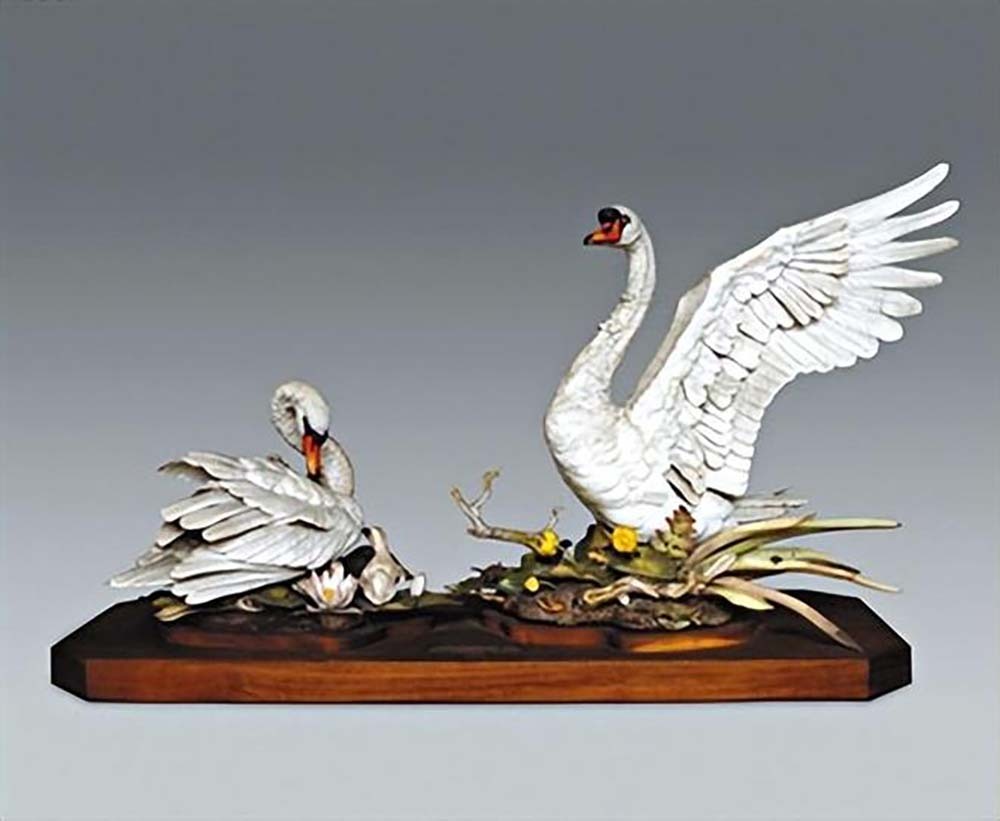 Created by renowned American porcelain artist Edward Marshall Boehm, the sculpture featured a graceful family of swans.
Every feather was sculpted in extraordinary detail.
The piece appeared almost alive.
In Western culture, swans symbolize peace, loyalty, elegance, and harmony.
The choice was deliberate.
The sculpture represented the hope that two nations that had spent decades facing one another across ideological divides could begin building a more cooperative future.
Today, the porcelain swan remains a fascinating reminder of the symbolic role that art and culture can play in diplomacy.
Why Did the Chinese Always Seem to Be Drinking Tea?
As the visit continued, American observers became increasingly curious about China's relationship with tea.
The Chinese appeared to have an occasion for tea at every moment.
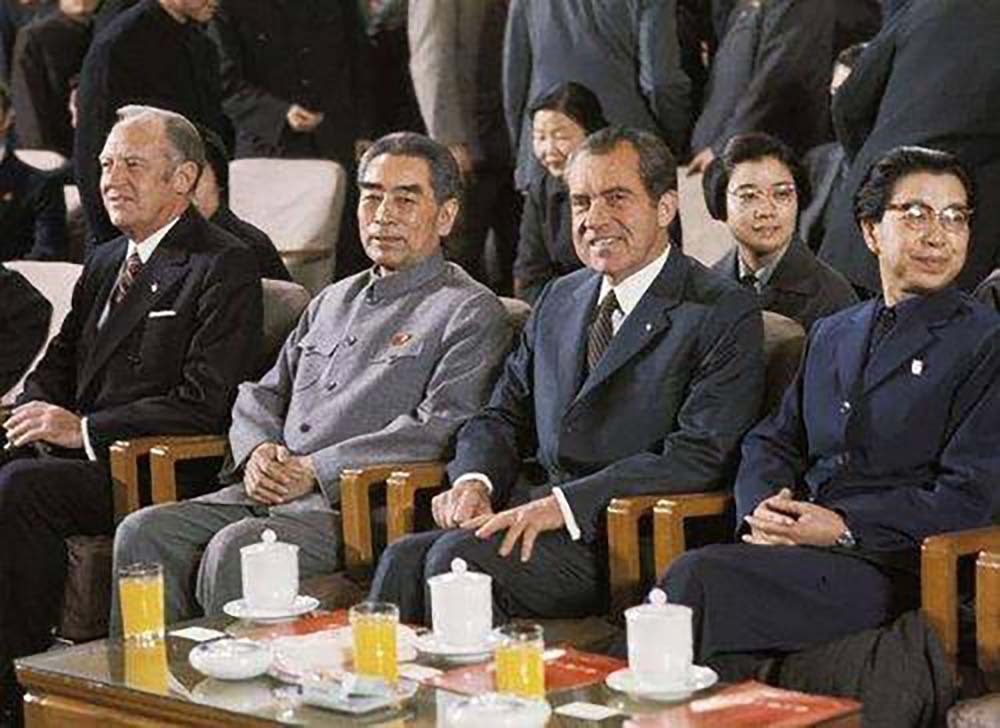 Friends drank tea together.
Guests were welcomed with tea.
Business discussions involved tea.
Even reconciliation often happened over tea.
In America, coffee often serves as a social lubricant.
In China, tea occupies an even deeper role.
Tea is not merely a beverage.
It is a language of hospitality.
A symbol of respect.
A means of creating an atmosphere conducive to conversation.
Many visitors discovered that trust was often built not across formal negotiating tables, but during quieter moments shared over cups of tea.
Hangzhou: The City That Captivated an American President
Among all the destinations on Nixon's itinerary, Hangzhou stood out as one of the most memorable.
For centuries, Chinese poets had celebrated Hangzhou as "Heaven on Earth."
For tea lovers, it was the birthplace of China's most famous green tea.
West Lake's beauty made an immediate impression on Nixon and the American delegation.
The calm waters reflected distant hills.
Willow branches swayed gently along the shore.
Mist drifted across the landscape.
Many American journalists were surprised.
They had expected a revolutionary state.
Instead, they found one of the world's most beautiful cultural landscapes.
Premier Zhou Enlai understood the symbolic importance of Hangzhou.
To introduce visitors to China, few places could have been more effective.
The Dish That Surprised Nixon
During a state banquet in Hangzhou, Nixon encountered one of the region's most famous culinary creations: Longjing Shrimp.
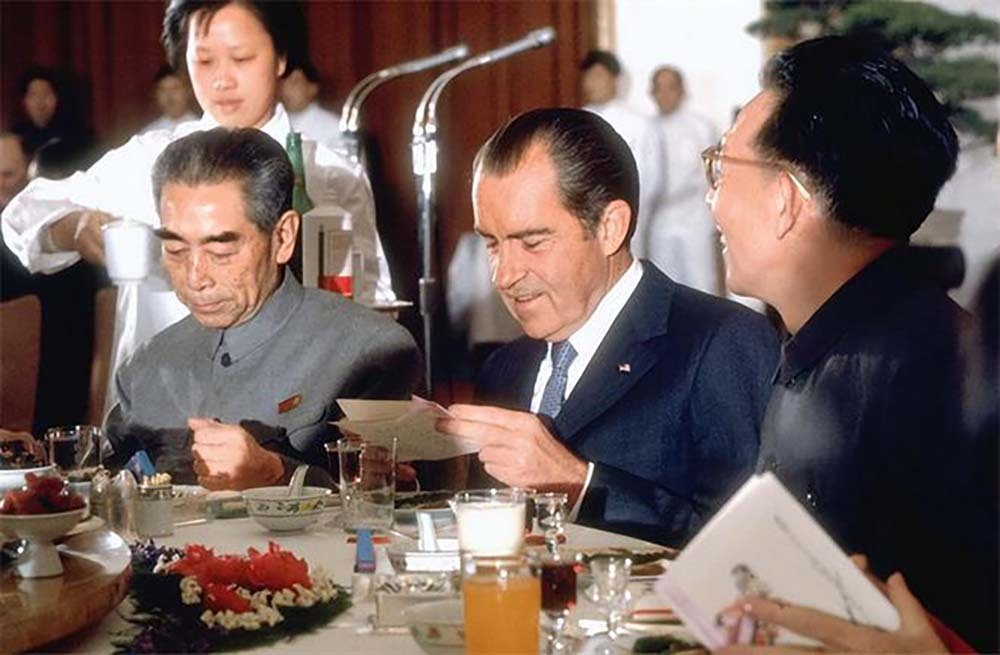 The dish combines fresh shrimp with young Dragon Well tea leaves.
For Chinese diners, it is a classic local specialty.
For Nixon, it was something entirely unexpected.
Tea in food?
The idea challenged many Western assumptions.
Until that moment, most Americans thought of tea only as a drink.
Longjing Shrimp revealed another dimension of Chinese tea culture.
Tea could influence cuisine just as deeply as it influenced daily life.
The dish left a lasting impression on many members of the American delegation.
Crystal Glasses and Chinese Tea Cups
The American delegation brought elegant crystal glasses engraved with the presidential seal.
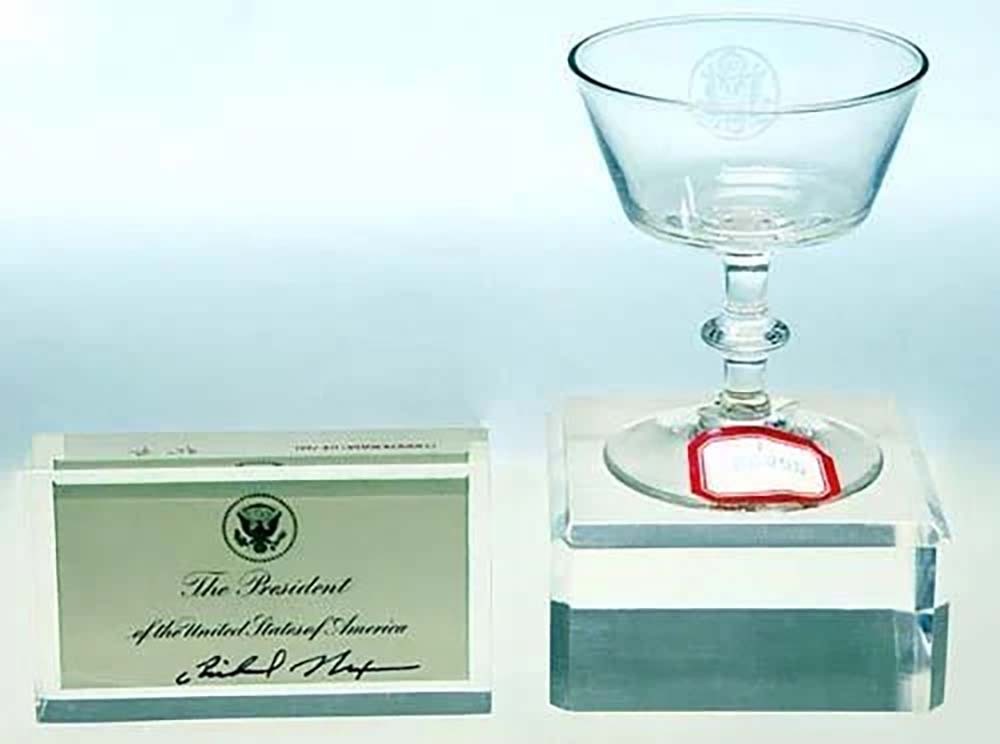 These beautifully crafted objects reflected Western traditions of ceremonial hospitality.
Yet many Americans soon noticed a striking contrast.
The most meaningful conversations often took place not around crystal glasses, but around simple Chinese tea cups.
On one side stood luxury and formality.
On the other stood simplicity and conversation.
Many journalists later recalled the tea cups more vividly than the crystal glasses.
Because what mattered was not the vessel itself, but the human connection it helped create.
"Chairman Mao Has Given You Half of China"
Of all the tea stories associated with Nixon's visit, none has become more famous than the tale of Da Hong Pao.
During a gift exchange, Chairman Mao Zedong presented Nixon with four liang of Da Hong Pao tea, roughly 200 grams.
To American eyes, the gift appeared surprisingly modest.
A president travels halfway around the world and receives only a small package of tea?
Sensing Nixon's confusion, Zhou Enlai smiled and offered an explanation.
"Mr. President," Zhou reportedly said, "Chairman Mao has given you half of China."
Nixon looked puzzled.
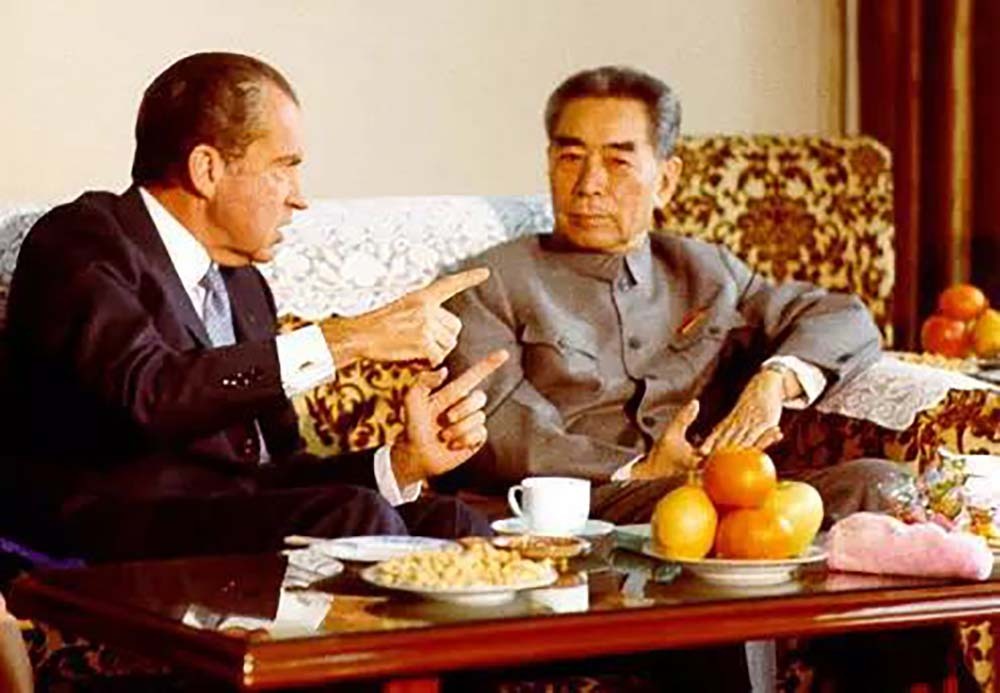 Zhou then explained that according to a widely circulated account, the original Da Hong Pao mother bushes produced only about eight liang of tea annually.
By giving away four liang, Mao had effectively given Nixon half of the year's harvest.
In other words, half of his "kingdom."
The room erupted in laughter.
Nixon reportedly appreciated both the gift and the humor behind it.
More than fifty years later, the story remains one of the most beloved legends in Chinese tea history.
Did Nixon Ever Drink the Da Hong Pao?
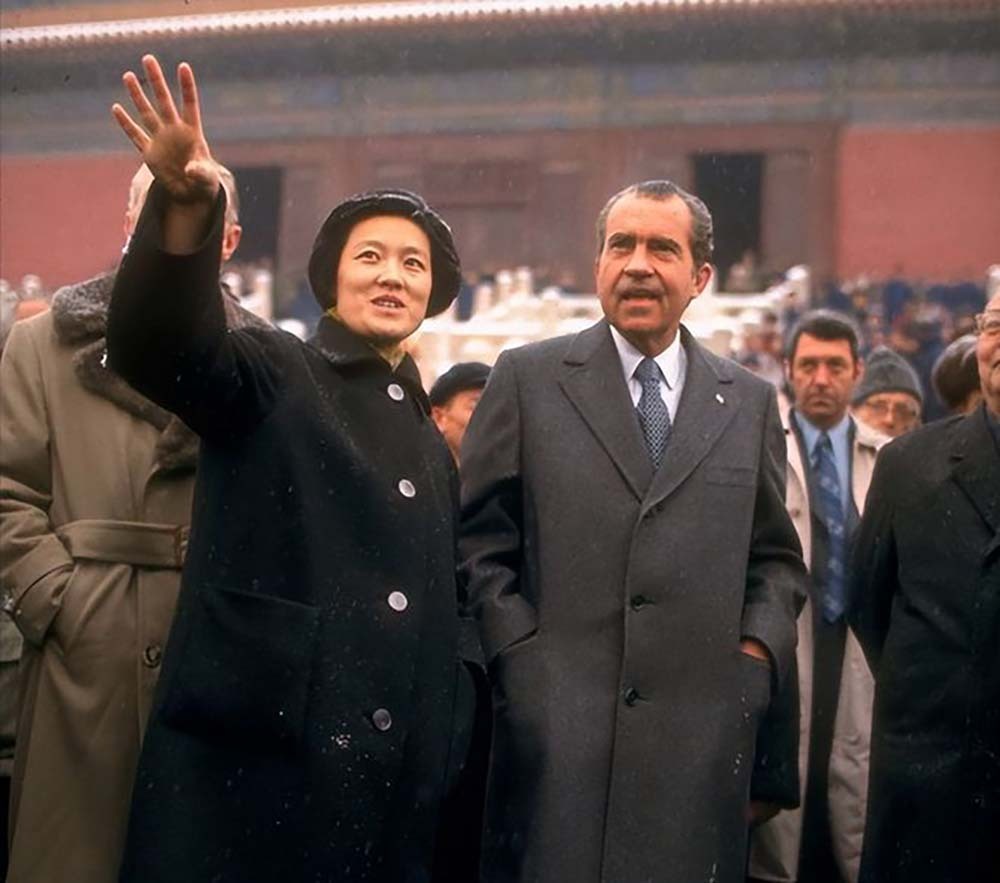 An intriguing question naturally follows.
Did Nixon ever actually drink the tea?
Unfortunately, history provides no definitive answer.
No official records reveal what ultimately happened to the famous gift.
Was it brewed and enjoyed?
Was it preserved as a diplomatic keepsake?
No one knows for certain.
Many historians believe Nixon likely sampled at least some of it.
After all, he had already developed an interest in Chinese tea during the visit.
Yet whether he drank it or not, he may not have fully understood its cultural significance.
In Chinese culture, the most meaningful gift is not always the most expensive one.
Often, it is the gift that is hardest to part with.
The phrase "half of China" was never really about monetary value.
It was about sincerity.
Can Anyone Drink Nixon's "Half of China" Today?
For tea enthusiasts, another question naturally arises.
Can modern tea drinkers still experience the same Da Hong Pao that Nixon received?
The answer is both yes and no.
The original Da Hong Pao came from a handful of ancient tea bushes growing on the cliffs of Jiulongke in the Wuyi Mountains.
These legendary bushes produced extremely small quantities of tea each year.
Over time, their historical importance became so great that authorities eventually ended commercial harvesting.
In 2006, the final official harvest was completed, and the mother bushes entered permanent protection.
No new tea from the original mother bushes reaches the market today.
In that sense, Nixon's Da Hong Pao belongs to history.
Yet the story does not end there.
Over the decades, growers propagated new tea plants from the original bushes through vegetative cloning.
These descendants preserve many of the characteristics that made Da Hong Pao famous.
Modern Da Hong Pao may not come directly from the legendary mother bushes, but it continues their lineage.
When tea lovers around the world brew a cup today, they are still experiencing a living connection to that remarkable history.
America Discovers Chinese Tea
When Nixon returned home, America experienced a wave of fascination with China.
Bookstores are filled with books about Chinese culture.
Restaurants introduced more Chinese cuisine.
Giant pandas became international celebrities.
And Chinese tea entered American awareness on an unprecedented scale.
For many Americans, Nixon's visit was their first introduction to names like Longjing, Da Hong Pao, and Jasmine tea.
Importers began exploring opportunities to bring Chinese teas into the United States.
Specialty tea merchants started studying Chinese tea traditions.
The foundations of today's American premium tea market were quietly being laid.
A Leaf That Carried a Civilization
Viewed from a Western perspective, one of the most remarkable aspects of Nixon's visit was not a political agreement or a strategic breakthrough.
It was the Chinese relationship with tea.
In much of the West, tea is primarily a commodity.
In China, tea often represents something deeper.
Balance.
Restraint.
Harmony.
Respect.
Tea does not seek attention through intensity.
Instead, it rewards patience and reflection.
Those values are woven into centuries of Chinese culture.
And in 1972, they offered a subtle yet powerful lesson in diplomacy.
On the evening of February 27, 1972, after the Shanghai Communiqué had been finalized, Nixon returned to the presidential suite on the 16th floor of Shanghai's Jin Jiang Hotel. Beyond the windows lay the glittering lights of Shanghai, while below stretched the gardens of one of China's most important state guesthouses. Only hours earlier, he and Premier Zhou Enlai had helped achieve one of the most significant diplomatic breakthroughs of the Cold War. Waiting for him in the quiet of the suite were briefing papers, official documents, and perhaps most fittingly, a freshly prepared cup of Chinese tea.
A Cup of Tea Cannot Change the World—But It Can Change People
Of course, no serious historian would argue that tea alone transformed U.S.-China relations.
The forces behind that historic breakthrough were strategic, political, and global in scale.
Yet history is not made only through treaties and official documents.
It is also shaped by human moments.
A handshake.
A shared laugh.
A porcelain swan.
A crystal glass.
A gift of Dragon Well tea.
Four liang of Da Hong Pao is known as "half of China."
From the Boston Tea Party of 1773 to the tea diplomacy of Beijing in 1972, tea witnessed one of the most remarkable transformations in international relations.
Once, it symbolized protest and division.
Later, it became a bridge of understanding.
Perhaps a single tea leaf cannot change the world.
But it can bring strangers to the same table.
It can encourage conversation.
It can create understanding where none existed before.
And sometimes, history begins with something as simple as a cup of tea.