
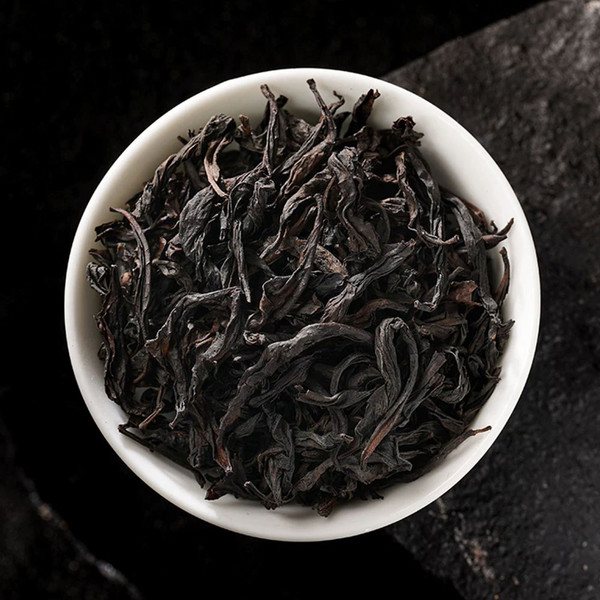


Product Overview
Wild Da Hong Pao is a distinctive and relatively rare Wuyi Rock Oolong tea from the Wuyi Mountains of Fujian, China. Unlike conventional plantation-grown tea, which is cultivated in organized gardens and managed through regular pruning and cultivation practices, wild tea trees grow naturally in mountainous woodland environments. They are scattered across different locations, exposed to varying soil conditions, vegetation, sunlight, and microclimates. Their natural growth patterns and diverse surroundings contribute to individual differences in aroma and flavor. Harvesting is considerably more difficult because the trees are widely dispersed and the available leaf material is limited, making the collection of these wild-grown leaves a time-consuming and challenging process.
The raw material for this tea is collected from several different wild tea-growing locations throughout the Wuyi Mountains, rather than from a single plantation or mountain site. Each collection area contributes its own characteristics, with subtle differences in fragrance and taste. Carefully selected leaves from these different locations are blended to create a harmonious and balanced tea. Bringing together these scattered sources requires considerable effort, making this tea particularly special and not easily produced in large quantities.
The tea receives a light roasting treatment, deliberately avoiding the heavier roasting traditionally associated with some styles of Wuyi Rock Tea. Rather than emphasizing intense charcoal, caramel, or roasted aromas, the gentle roasting process aims to preserve the tea's original aromatic character and natural qualities. This approach allows its delicate floral fragrance to remain at the forefront, giving the tea a fresh, elegant, and naturally expressive personality.
One of the most appealing features of this Wild Da Hong Pao is its pronounced yet graceful floral aroma. Once brewed, the fragrance opens up beautifully, revealing a clear, fresh, and naturally delicate floral character. The aroma is noticeable and persistent without being overpowering or artificially intense. It is not dominated by heavy roasting notes, but instead offers a clean and refreshing fragrance that reflects the natural character of the tea leaves.
The liquor is warm, smooth, and gentle on the palate. Rather than offering the powerful, thick, and assertive character often associated with heavily roasted Wuyi Rock Teas, this tea has a lighter, more delicate body. Its floral fragrance blends naturally with the liquor, creating a pleasant and harmonious drinking experience. The taste is soft and rounded, with very little bitterness or astringency, followed by a subtle sweetness and gentle lingering aftertaste. Its appeal lies not in intensity, but in the balance between fragrance, smoothness, and natural elegance.
Compared with conventional medium- or heavily roasted Wuyi Rock Teas, which often emphasize roasted aromas, richer body, and a stronger mineral character, this Wild Da Hong Pao offers a different expression of Wuyi tea. Its lighter roasting preserves more of the original floral character, while the liquor remains soft, clean, and approachable. It is particularly suitable for those who appreciate fragrant oolong teas, delicate floral aromas, and a smoother drinking experience rather than a powerful, heavily roasted taste.
Brewing Guide:
A 100–120ml white porcelain gaiwan is recommended because it allows the natural floral fragrance to develop clearly without absorbing the tea's aroma. A small teapot or glass teaware can also be used. The brewing parameters can be adjusted according to your personal preference, allowing you to emphasize either the floral fragrance or the body of the tea.
For a lighter, more fragrant infusion, use approximately 5g of tea with water at 90–95°C. Keep the initial steeping time short, around 5–8 seconds, gradually increasing it with subsequent infusions. This approach highlights the tea's fresh floral aroma and produces a lighter, softer liquor.
For a balanced infusion with both expressive fragrance and a fuller taste, use 6–7g of tea with boiling water at 95–100°C. Start with approximately 8–12 seconds for the first few infusions, gradually extending the steeping time to 15–20 seconds. This is a good starting point for experiencing the tea's overall character.
For a fuller and more substantial liquor, increase the amount of tea to approximately 7–8g per 100–120ml of water and use freshly boiled water at 100°C. The initial steeping time can be extended to around 12–20 seconds. A higher leaf-to-water ratio and slightly longer infusion will bring out more body and flavor.
As a general guideline, shorter steeping times emphasize fragrance and freshness, while a higher leaf-to-water ratio or longer steeping produces a fuller, richer liquor. Feel free to experiment with these parameters to find the balance that best suits your taste. With careful brewing, the tea can offer multiple layers of enjoyment, from its delicate floral fragrance to its warm, smooth taste and gentle natural sweetness.