


Product Overview
Cheung Hing Tea Hong is a traditional, family-run tea shop located on Queen’s Road West in Sheung Wan, an area historically known as one of the earliest Chinese commercial districts in Hong Kong. Cheung Hing Tea Hong is an old tea house that originated in Anxi, Fujian, in 1895. After moving to Hong Kong in the 1950s, the name Cheung Hing became well-known in local old tea houses. The shop has operated for decades through Hong Kong’s post-war recovery, industrial expansion, and transformation into an international city. It remains one of the few old-style tea merchants that still preserves the atmosphere and working methods of a classic Cantonese tea house supply shop.
In the post-war years, tea shops in Hong Kong were more than retail outlets; they were essential parts of daily life. With the flourishing of yum cha culture and Cantonese restaurants, demand for roasted oolong and aged teas was strong. Traditional tea merchants selected, blended, re-roasted, and stored teas to suit local taste preferences. Cheung Hing Tea Hong continues this heritage model. The interior still features wooden drawers, large metal tea canisters, weighing scales, and traditional roasting equipment. The current owner, a second-generation successor, learned tea evaluation, roasting control, and storage techniques from his father. He is known for prioritizing flavor stability and long-term aging potential over modern packaging trends.
Hong Kong developed its own distinctive tea preference over time. Influenced by Fujianese and Cantonese migration, local drinkers favor teas with stronger roast levels, fuller body, and high durability across multiple infusions. Re-roasting and aging are common practices to adapt teas to Hong Kong’s humid climate and robust drinking habits. Cheung Hing Tea Hong reflects this “Hong Kong style” philosophy, emphasizing depth, warmth, and transformation through time rather than chasing novelty.
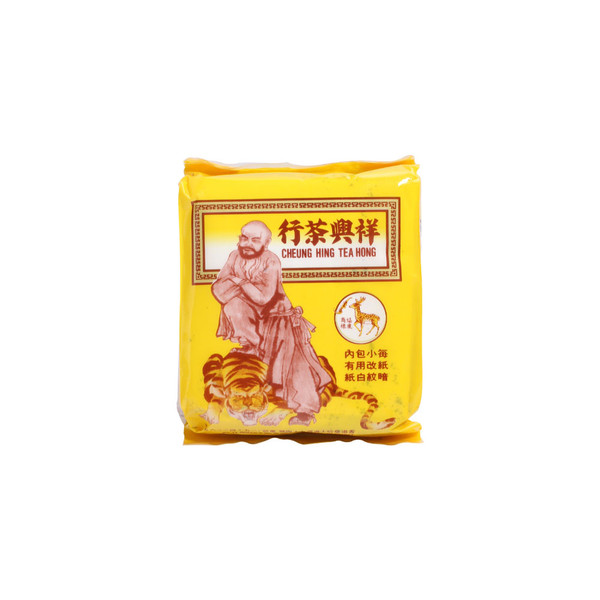
One of the shop’s signature teas is Tie Luo Han, a classic Wuyi rock oolong. Their Tie Luo Han is traditionally charcoal-roasted and then stored for 10 year to allow the roast to settle and integrate. It brings out the unique mellow aroma of aged tea, and the fragrance lingers long after brewing. The bright yellow packaging contains 8 small paper tea bags, and the bat and deer logo and the image of Luohan subduing a tiger printed on the packaging highlight the long history of this Tie Luo Han tea. The dry leaves are tightly twisted and dark, while the liquor is bright amber-orange. The aroma carries pronounced roasted notes layered with mineral “rock rhyme,” characteristic of Wuyi yancha. On the palate, it is thick, structured, and long-lasting, with a deep aftertaste. As infusions progress, the profile gradually shifts from bold roast toward subtle floral, fruity, and aged sweetness. Some regular customers purchase it for further home aging, reflecting a long-standing Hong Kong appreciation for time-matured tea.
Today, Cheung Hing Tea Hong stands not only as a tea retailer but also as a living piece of Hong Kong’s cultural memory, preserving the craftsmanship, roasting traditions, and community-centered spirit of the city’s classic tea trade.
Brewing Guide: Gongfu style preparation is recommended. Use a 100–120 ml Yixing clay teapot or gaiwan with a bag of tea. Water temperature should be 95–100°C. Rinse quickly, then steep the first infusion for about 5 seconds before pouring. Increase each subsequent infusion by several seconds. The tea can easily sustain 8–10 infusions or more. Short, high-temperature infusions best reveal its aromatic layers and mineral depth. While larger-pot steeping is possible with reduced leaf quantity and longer brewing time, traditional Gongfu preparation more fully expresses its complexity and evolving character.