

Product Overview
Baohong Tea is a traditional Yunnan green tea belonging to the small-leaf varietal group, produced around Baohong Mountain in Yiliang County, Kunming, Yunnan Province. The tea gardens are concentrated in the vicinity of Baohong Temple, where elevation is approximately 1,000 meters. The region benefits from a mild subtropical plateau climate, with an average annual temperature around 16°C and rainfall of 1,200–1,400 mm. Frequent mist, stable humidity, and moderate diurnal temperature variation create an ideal microclimate for early spring bud development, contributing to the tea’s refined and delicate character.
Historically, Baohong Tea is closely linked to Baohong Temple (also known as Xiangguo Temple), founded during the Tang Dynasty. According to local tradition, the temple was established by Monk Xuanxing from Fujian, who is said to have introduced small-leaf tea plants from the southeast coastal region into Yunnan. Over centuries of adaptation to the highland environment, these plantings evolved into a distinct local small-leaf tea population. As such, Baohong Tea occupies a rare position among Yunnan green teas, carrying both agricultural continuity and monastic cultural heritage.
It is important to clarify a common misconception in the market: Baohong Tea is sometimes labeled as “Yunnan Longjing.” This is purely a stylistic comparison rather than a botanical or historical relationship. There is no genetic or production linkage to Zhejiang Longjing (Dragon Well). The association arises mainly from superficial similarities in appearance—flat, smooth leaf shape—and certain shared sensory impressions such as chestnut-like roasted aromas produced by pan-firing techniques. In essence, Baohong Tea remains an independent Yunnan small-leaf green tea system with its own lineage, terroir expression, and processing identity.
From an agronomic perspective, Baohong Tea is defined by its extremely early spring harvest and narrow picking window. Harvest typically begins in early spring and concludes approximately 5–10 days before Qingming Festival. Only the most tender material is selected, usually one bud with one leaf or one bud with two leaves at early unfolding stage. This strict standard ensures high aromatic clarity and preserves the delicate biochemical profile required for its refined style.
Processing follows traditional green tea methods, centered on fixation (killing green), light rolling, and pan-firing. The key to its style lies in precise heat control: sufficient fixation to lock in freshness, combined with gentle roasting to develop its signature chestnut and subtle toasted grain aroma without overpowering the natural floral-green base. This balance results in a tea that is both clean and aromatically layered.
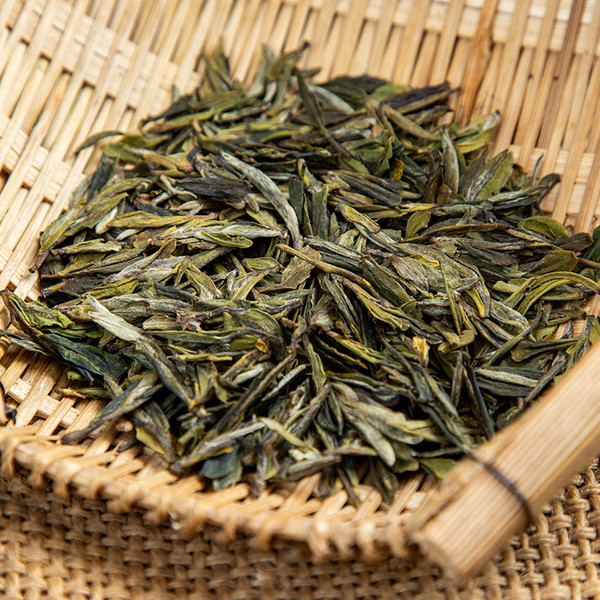
The dry leaf is typically flat, slender, and slightly irregular, displaying a bright green base tone interwoven with occasional olive-brown and silvery tips. Aromas in the dry leaf are clean and understated, often combining fresh vegetal notes with a faint hay-like sweetness.
When brewed, Baohong Tea produces a pale yellow to light yellow-green liquor, bright and clear in appearance. The aromatic profile opens with fresh green and soft floral notes, gradually developing into chestnut and light roasted nut tones. Unlike heavier roasted teas, its chestnut character remains airy and restrained, serving as a structural accent rather than a dominant force.
On the palate, the tea is defined by freshness, softness, and clarity. The texture is light and smooth, with minimal bitterness when properly brewed. A gentle sweetness emerges mid-palate, followed by a clean, lingering finish. The overall structure emphasizes purity and elegance rather than intensity or thickness, making it a classic example of a refined early-spring green tea with a calm, transparent drinking experience.
Brewing Guide: it is recommended to use approximately 3 grams of tea per 300 ml of water. Optimal water temperature is 75–80°C. Steep for 1–3 minutes depending on preference. Higher temperatures may suppress its delicate sweetness and amplify astringency, while lower, controlled temperatures reveal its layered aroma and soft, evolving sweetness. Multiple infusions are possible, with each steep showing subtle shifts from fresh green clarity to gentle sweetness and soft roasted undertones.